A Walk to Think More Clearly Today
A gentle guide to using ordinary walks to untangle thoughts, notice what matters, and find a practical next step without adding pressure.
Make Room for Thought, Not Another Task
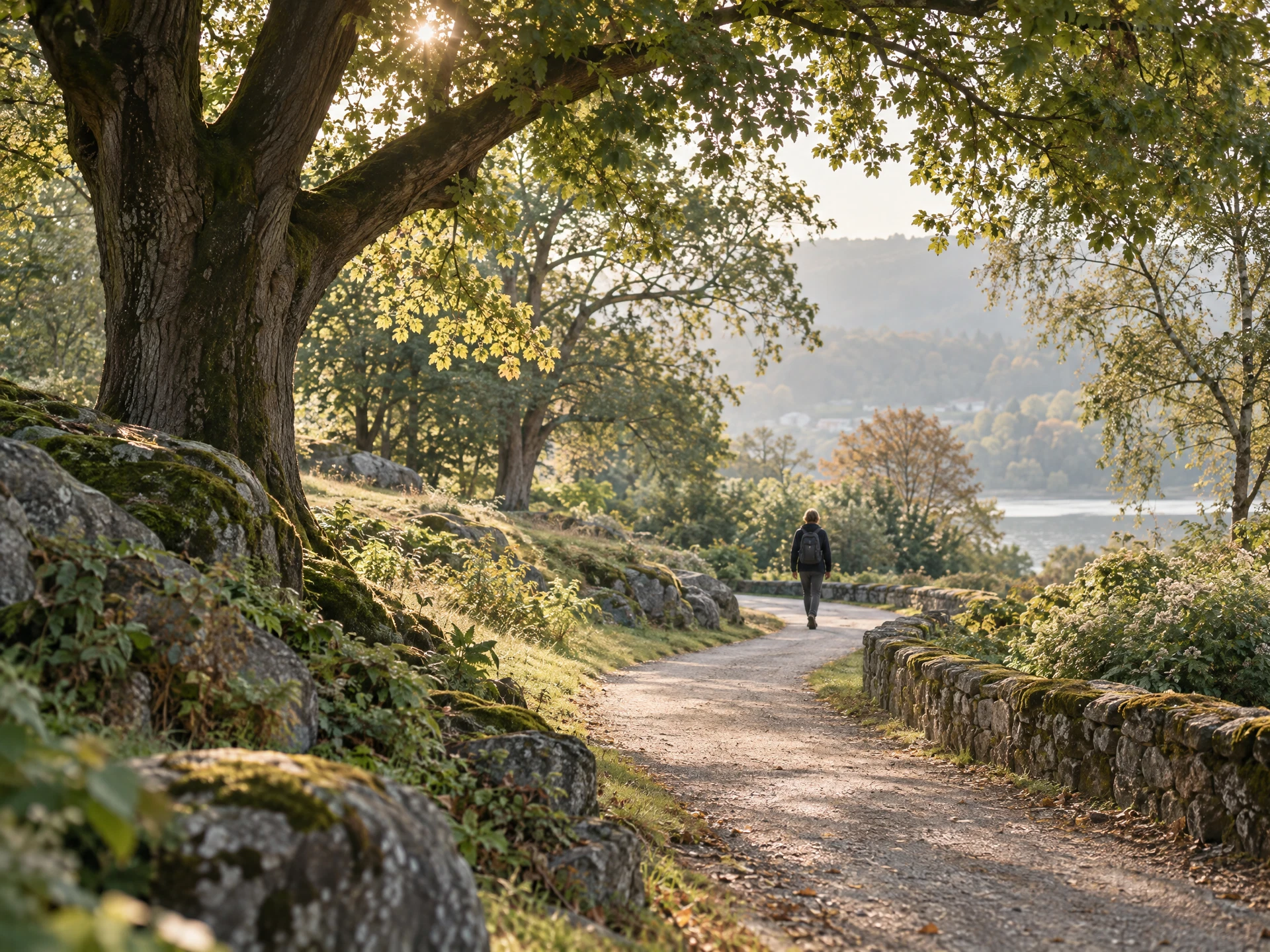
Sometimes a thought becomes harder to hold when we stay in the same place, facing the same screen or pile of tasks. A walk does not magically solve a problem, and it need not become a productivity technique. It can simply change the scene long enough for us to notice what we are thinking and what we need. The movement, the air, and the ordinary details along the way may give a tangled idea a little room.
Start with a question that belongs to you, rather than trying to solve everything at once. It might be, “What is making this decision feel difficult?” or “What is one part of this project I can clarify?” You do not have to arrive with a polished question. Even naming the feeling—uncertainty, fatigue, or too many choices—can be a useful beginning. Let the walk be a pause for observation, not a demand to produce an answer.
Keep the invitation modest. A short walk around the block, along a familiar path, or through a safe indoor space may be enough. The point is not distance, pace, or a perfect routine. If movement is uncomfortable or unavailable, changing where you sit or standing by a window can offer a small shift in perspective. Choose what is accessible to you, and do not treat a walk as a substitute for rest, support, or professional help when those are what you need.
Ideas rarely need a perfect plan; they need a next step you can return to.
Use Simple Cues to Stay Present
A walk can help us notice the difference between considering a question and circling it repeatedly. To make space for the first without getting pulled into the second, give your attention something gentle to return to. Notice the feel of your steps, the temperature, a sound nearby, or the shapes and colors around you. There is no special observation to achieve; ordinary details are enough.
You might begin by walking quietly for a few minutes, then bring your question to mind. If useful, ask what you know, what you are assuming, and what remains unclear. Let possible answers come and go without requiring an immediate verdict. If the same worry repeats, acknowledge that it has returned and return attention to the path or surroundings. This is not a test of concentration, and it is fine if your mind wanders.
A small, repeatable ritual can make the practice easier to approach: choose a familiar route, leave some time without a podcast or messages if that feels comfortable, and finish by naming one thing you noticed. Perhaps the answer is, “I need fewer options,” “My body needs a break from sitting,” or “I do not want to make this decision today.” Adjust the ritual to your circumstances. Its value is not measured by how often you repeat it, but by whether it fits your life.
Turn a Tangled Idea into a Visible Step
Walking may be especially useful when we separate productive thought from going over the same ground. If your mind keeps replaying an old conversation, ask: Which part can I influence, and which part is outside my control? If work has accumulated, ask: What is the smallest clear action I could take when I return? You do not need to create a complete plan. It is enough to turn a vague mass into an action you can name.
Imagine someone putting off a presentation for a creative project. During a walk, they may realize the difficulty is not a lack of ideas but not knowing how to begin. Back at their desk, they write a provisional title and three points, then stop. A parent might notice after a crowded day that what they need is not “the perfect time for myself,” but ten minutes without requests. An employee might use a short walk after work to mark a boundary between the concerns of the office and the space of home, without turning the trip into a harsh review of the day.
At the end, ask realistic questions: Is the idea clearer, or did I simply need a change of scene? Do I have enough energy for one small step, or would rest be better? Is this truly my question, or one imposed by other people’s expectations? Every answer is legitimate. Sometimes the important discovery is that a delay needs temporary acceptance, not more pressure.
Let the Walk Be Flexible, Not an Obligation
To keep walking from becoming one more assignment, give it a flexible place in the day. It might happen before work, between tasks, after an errand, or in the evening when the neighborhood and conditions allow. There is no need to require one fixed time or a set number of days. The aim is to open a small window for attention, not to collect points for discipline. If going outside does not suit the moment, stand by a window, move around a safe indoor space, or change seats for a few minutes. Change the scene in whatever way is available.
A simple agreement with yourself can keep expectations small: “I’ll walk to the end of the street, notice three things I had not noticed before, and then decide whether to continue.” Leave yourself free to return early. Bring water or an appropriate extra layer if needed, and let someone close to you know your route if that would help you feel at ease. These practical details do not spoil reflection; they protect it from unnecessary worry.
After trying it a few times, do not ask, “Did I stick to the plan properly?” Instead ask: When did the route feel comfortable and safe? Which questions became clearer away from my desk? Did the walk feel like a real break, or another way to avoid resting? Use what you learn to adjust the timing or route, or set the idea aside for now. A simple next step is to choose a short walk on a nearby day, take just one question, and then return to life as it is—with a small action if one emerges, and a little more calm if it does not.